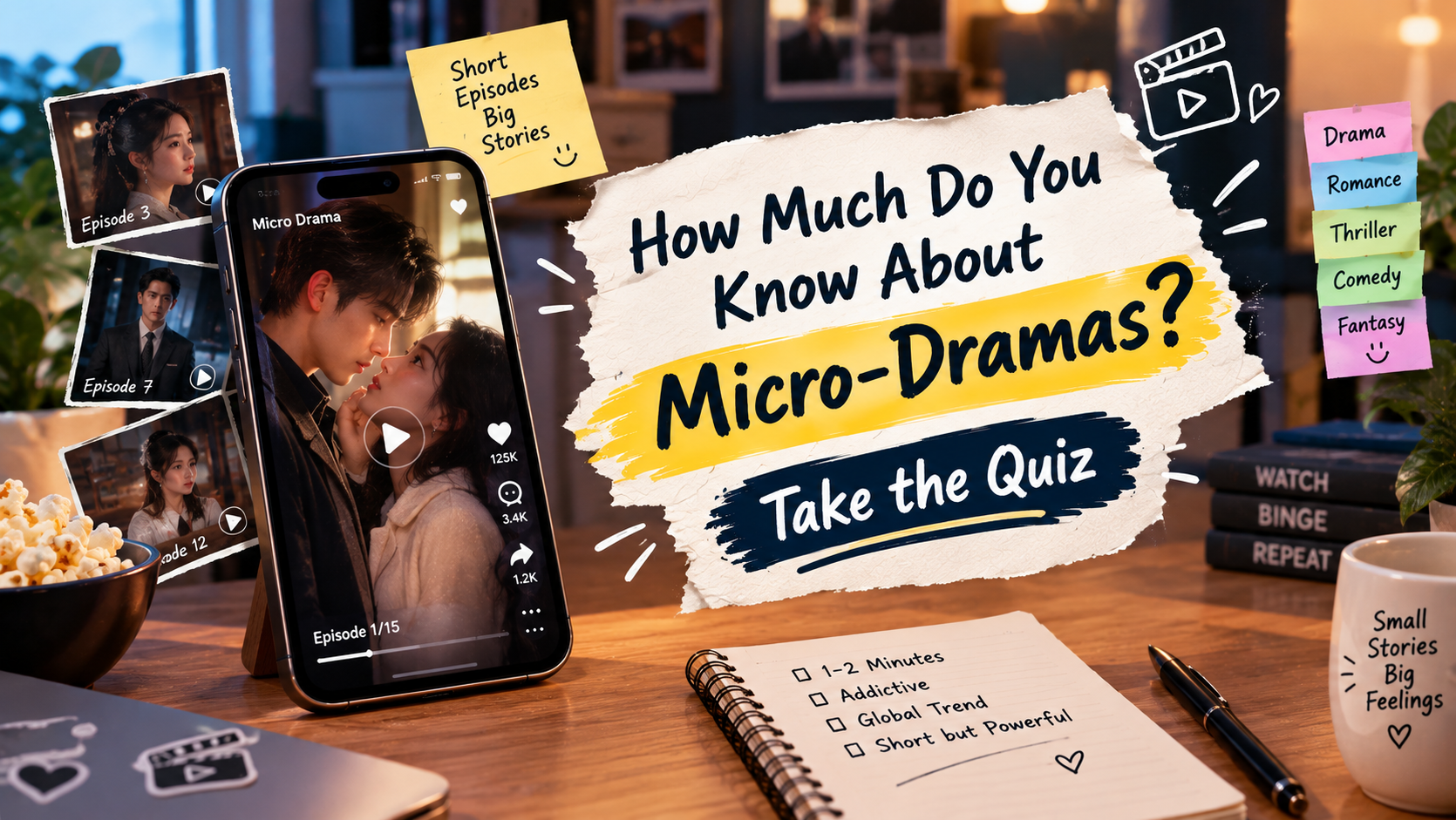
How Much Do You Know About Micro-Dramas? Take the Quiz
How Much Do You Know About Micro-Dramas? Take the Quiz
Have you ever started watching a short video just to see what happens next, only to find yourself looking for the next episode? That is the kind of curiosity that makes short-form storytelling so engaging.
Micro-dramas are short, episodic stories designed to deliver a plot in small, easy-to-watch instalments. Many use vertical video, strong emotional moments and cliffhangers to keep viewers interested. Instead of sitting down for a full-length television episode, people can follow a story in short bursts on their phones.
The format fits naturally into a world where people watch videos while travelling, taking breaks or relaxing at home. It also gives writers and creators a different way to tell stories, with every short episode needing a reason for viewers to continue.
But how much do you actually know about this style of entertainment? Try the quiz below. It covers storytelling techniques, episode structure, mobile video, audience habits and the ideas behind short-form drama.
How to Take This Micro-Drama Quiz
- There are 50 multiple-choice questions.
- Choose the best answer for each question.
- Keep track of your answers as you go.
- Check the answer key at the end to calculate your score.
Watch: What Are Micro-Dramas?
Watch this short explainer to learn more about micro-dramas and how this style of storytelling works.
How to Take This Micro-Drama Quiz
- There are 50 multiple-choice questions.
- Choose the best answer for each question.
- Keep track of your answers as you go.
- Check the answer key at the end to calculate your score.
Part 1: Understanding Micro-Dramas
1. What is a micro-drama?
- A short, episodic dramatic story
- A documentary about filmmaking
- A live news broadcast
- A feature-length cinema film
2. Which device is commonly used to watch vertical micro-dramas?
- A radio receiver
- A smartphone
- A record player
- A printed magazine
3. What does episodic storytelling mean?
- Every scene is filmed in one take
- A story is told entirely through photographs
- A story unfolds across separate instalments
- A plot has no beginning or ending
4. What is a cliffhanger?
- A complete explanation of every mystery
- A scene with no connection to the story
- A long introduction to the cast
- An unresolved moment that encourages viewers to continue
5. What does vertical video usually mean?
- A video designed in portrait orientation
- A video recorded only from above
- A video without any sound
- A video that can only be watched on television
6. What is a common feature of micro-drama episodes?
- They must all be exactly one minute long
- They use a short runtime to move the story forward
- They never include dialogue
- They must be filmed without actors
7. Which element helps viewers understand a story quickly?
- A long list of unrelated facts
- Several minutes of unexplained scenery
- A clear conflict or immediate problem
- An ending shown before the characters appear
8. What is a protagonist?
- The person who edits the soundtrack
- The location where a story takes place
- The final scene of an episode
- The central character in a story
9. What is dialogue?
- Words spoken by characters
- The lighting used in a scene
- The list of filming locations
- The arrangement of camera equipment
10. What is the main purpose of an episode ending?
- To introduce unrelated information
- To conclude a beat or create interest in what follows
- To remove the main character from every episode
- To repeat the opening scene without changes
Part 2: Storytelling and Drama
11. What does pacing refer to in storytelling?
- The number of cameras on set
- The colour of the costumes
- How quickly or slowly the story develops
- The size of the production team
12. Why might a writer introduce a problem early in a short episode?
- To avoid giving the characters anything to do
- To make the episode longer without adding story
- To explain the entire ending immediately
- To give viewers an immediate reason to pay attention
13. What is a plot twist?
- An unexpected development that changes how the story is understood
- A scene filmed from a different camera angle
- A list of characters in the credits
- A type of background music
14. What is the purpose of character motivation?
- To determine the video's aspect ratio
- To explain why a character acts or makes decisions
- To decide where subtitles appear
- To describe the camera lens
15. What does a story's conflict provide?
- A replacement for the main characters
- A guarantee that every viewer will agree
- A problem or struggle that drives the plot
- A list of production expenses
16. What is foreshadowing?
- Removing every clue from a story
- Showing the complete ending at the beginning
- Repeating dialogue without purpose
- Offering clues about something that may happen later
17. What makes a character's development meaningful?
- The character changes or learns through the story
- The character wears a different outfit in every scene
- The character appears only in the opening credits
- The character never faces a challenge
18. What is a subplot?
- A summary of the entire series
- A secondary storyline connected to the main narrative
- A list of deleted scenes
- A technical note for the camera operator
19. Why is continuity important between episodes?
- It ensures every episode uses the same background music
- It prevents characters from speaking
- It helps the story remain consistent across instalments
- It requires every episode to have the same ending
20. What is a payoff in storytelling?
- A payment made to a video platform
- A camera movement during a dramatic scene
- A list of actors who appear in a series
- A satisfying result that follows an earlier setup
Part 3: Mobile Video and Production
21. Which aspect ratio is commonly associated with portrait smartphone video?
- 16:9
- 9:16
- 4:3
- 2.39:1
22. Why should important visual details stay away from the edges of a vertical video?
- To make every shot look blurry
- To prevent the story from having dialogue
- To reduce the number of characters
- To leave room for interface elements and avoid awkward cropping
23. What does a close-up shot usually emphasize?
- A character's expression or a small but important detail
- The entire landscape from a great distance
- The full production budget
- The audience's seating arrangement
24. What is a storyboard used for?
- Recording audience comments after release
- Listing the prices of filming equipment
- Planning scenes visually before filming
- Replacing the final edited video
25. Why is clear audio important in a short drama?
- It makes the video automatically go viral
- It helps viewers understand dialogue and important sounds
- It removes the need for a script
- It guarantees that the story is original
26. What is the role of editing?
- To select and arrange footage into a coherent sequence
- To write every viewer's review
- To decide whether viewers like a character
- To replace the actors after filming
27. What is a shot-reverse-shot sequence often used for?
- Showing a location without any characters
- Displaying production credits
- Replacing all dialogue with text
- Showing alternating views of characters in a conversation
28. What does a script normally contain?
- Only the video's final viewing figures
- Only the names of the production equipment
- Dialogue and descriptions of scenes or actions
- A complete record of every audience reaction
29. What is the purpose of sound design?
- To remove every emotional moment
- To shape the sounds that support a scene's atmosphere and action
- To determine the story's written language
- To choose the video's thumbnail dimensions
30. Why might creators use captions or subtitles?
- To make the video impossible to follow
- To replace every visual scene
- To guarantee a particular number of views
- To help viewers follow dialogue, including when sound is off
Part 4: Watching and Discovering Short Series
31. What is binge-watching?
- Watching several episodes in one sitting or over a short period
- Watching a single frame repeatedly to edit it
- Recording a series without watching it
- Reading the cast list before every episode
32. What does a recommendation algorithm generally do?
- Writes every episode's dialogue automatically
- Guarantees that a viewer will enjoy every video
- Uses signals or data to suggest content a person may like
- Removes the need for viewers to choose what to watch
33. What is a trailer?
- A complete transcript of every episode
- A short preview designed to introduce a film or series
- A document listing filming expenses
- A collection of unrelated viewer comments
34. What is a series finale?
- The first scene of a new season
- A preview of a different series
- A list of production staff
- The final episode of a series
35. What does a season usually mean in episodic entertainment?
- A group of episodes released as a related instalment of a series
- A video recorded during winter only
- A collection of unrelated advertisements
- A single camera angle used throughout a story
36. What is a streaming platform?
- A device used only to record sound
- A printed guide to television programmes
- A service that delivers video or audio over the internet
- A piece of equipment used to light a set
37. What does audience retention measure in video analytics?
- The total number of actors hired
- How much of a video viewers continue watching
- The cost of every filming location
- The number of subtitles in a script
38. What is a teaser designed to do?
- Explain every plot point in full
- Replace the complete series
- List every line spoken by the cast
- Offer a brief preview that builds curiosity
39. Why might a viewer share a short drama with a friend?
- They think the story, scene or twist is worth discussing
- Sharing always unlocks the next episode
- Every platform requires sharing before playback
- It guarantees the series will have a second season
40. What is a watchlist?
- A record of a production company's expenses
- A list of scenes removed during editing
- A collection of titles someone wants to watch later
- A schedule used only by camera operators
Part 5: The Business and Future of Micro-Dramas
41. What is monetisation in digital entertainment?
- Making every episode free forever
- Turning content or its audience into a source of revenue
- Removing all promotional material
- Changing a video's aspect ratio
42. What is product placement?
- Putting every product in the opening credits
- Removing brands from every scene
- Displaying a product only after the series ends
- Featuring a product or brand within a story or scene
43. What does a subscription model generally involve?
- Paying regularly for access to a service or content
- Paying only when a character appears on screen
- Receiving a printed script with every episode
- Watching content without any internet connection in all cases
44. What is an advertisement-supported video model?
- A model where all production costs disappear
- A system that prevents creators from earning revenue
- A model where advertising helps fund the content or service
- A format that only works for silent films
45. Why might a micro-drama use a recurring cast of characters?
- To avoid developing any storylines
- To build familiarity and continue character relationships
- To guarantee that every episode has the same plot
- To eliminate the need for dialogue
46. What is localisation in entertainment?
- Removing the story from its original setting
- Changing every character's personality
- Making every version use the same language only
- Adapting content for a particular language or audience
47. How can subtitles help a series reach more viewers?
- They can make dialogue accessible to people who do not speak the original language
- They automatically change the actors' performances
- They guarantee the series will become popular
- They remove the need to edit the video
48. What is one potential creative challenge of very short episodes?
- There is never enough time to show a single character
- Short stories cannot include dialogue
- Writers must balance quick engagement with believable development
- Every episode must contain a different genre
49. What should a creator consider when adapting a story for mobile viewing?
- Only the size of the production office
- Screen orientation, readable visuals, sound and episode pacing
- Only the number of actors in the cast
- The assumption that every viewer watches on a television
50. What is the most important foundation of a memorable micro-drama?
- Making every episode end with the same line
- Using as many camera effects as possible
- Making the episodes long regardless of the story
- A compelling story that gives viewers a reason to care
Micro-Drama Quiz Answer Key
Finished all 50 questions? Check your answers below and see how much you know about short-form storytelling.
- A — A short, episodic dramatic story
- B — A smartphone
- C — A story told across separate instalments
- D — An unresolved moment that encourages viewers to continue
- A — Portrait orientation
- B — A short runtime moves the story forward
- C — A clear conflict or immediate problem
- D — The central character
- A — Words spoken by characters
- B — Conclude a beat or create interest in what follows
- C — How quickly or slowly the story develops
- D — Give viewers an immediate reason to pay attention
- A — An unexpected development
- B — Explain a character's decisions
- C — A problem or struggle that drives the plot
- D — Clues about something that may happen later
- A — The character changes or learns
- B — A secondary storyline
- C — Keep the story consistent across instalments
- D — A satisfying result following an earlier setup
- B — 9:16
- D — Leave room for interface elements and cropping
- A — A character's expression or an important detail
- C — Plan scenes visually before filming
- B — Help viewers understand dialogue and sounds
- A — Select and arrange footage
- D — Alternate views of characters in conversation
- C — Dialogue and scene or action descriptions
- B — Shape sounds that support the scene
- D — Help viewers follow dialogue when sound is off
- A — Watching several episodes in a short period
- C — Suggest content using data or signals
- B — A short preview of a film or series
- D — The final episode of a series
- A — A related group of episodes
- C — A service delivering media over the internet
- B — How much of a video viewers continue watching
- D — Build curiosity with a brief preview
- A — The story or scene is worth sharing
- C — Titles someone wants to watch later
- B — Turning content or its audience into revenue
- D — Featuring a product or brand in a story
- A — Build familiarity and continue relationships
- C — Advertising helps fund content or a service
- B — Build familiarity and continue character relationships
- D — Adapt content for a language or audience
- A — Make dialogue accessible across languages
- C — Balance quick engagement with believable development
- B — Consider orientation, visuals, sound and pacing
- D — A compelling story that makes viewers care
How Did You Score?
- 45–50: Micro-drama expert. You understand the format and the storytelling techniques behind it.
- 35–44: Strong score. You know your way around short-form entertainment.
- 25–34: Good start. You have the basics down, with a few things left to discover.
- 0–24: Time to explore the format. You may notice new storytelling details the next time you watch a short series.
These score ranges are just for fun. The quiz tests general knowledge of storytelling and digital video, not how often someone watches micro-dramas.
Why Micro-Dramas Are Worth Knowing About
Micro-dramas show how storytelling can adapt to the way people use their screens. A short episode can still introduce a character, build tension and leave a question unanswered. The challenge is making those moments feel like part of a meaningful story rather than a string of disconnected surprises.
The format also creates opportunities for writers, actors and independent creators to experiment with mobile-first storytelling. Whether micro-dramas become a lasting entertainment habit or continue to evolve into new formats, they offer an interesting look at how audiences discover and follow stories.
How many questions did you get right? Share your score with a friend and see who knows the most about micro-dramas.