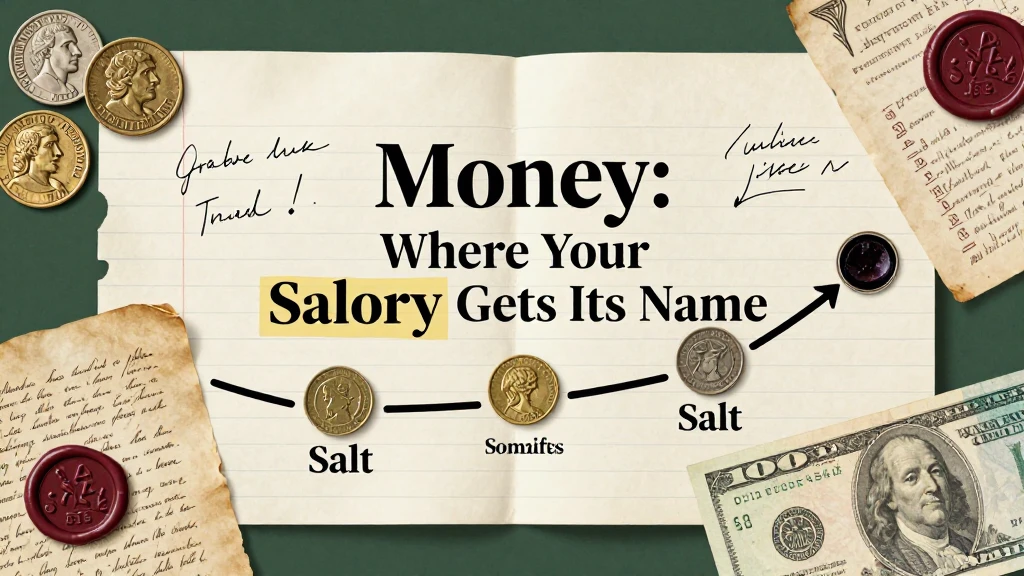
Money: Where Your Salary Gets Its Name
Money is the rare quiz category where everyone has daily experience and almost no one knows the history. Where did coins come from? Why is it called a salary? And why would anyone print a hundred-trillion-dollar note?
Before Coins
For most of history, people traded goods directly or used objects everyone valued. Cowrie shells served as money across parts of Africa and Asia for centuries. On the Pacific island of Yap, people used huge stone discs called rai, some too heavy to move. Ownership changed hands while the stone stayed put — everyone simply remembered who owned it. Economists like to point out that this is not so different from a modern bank balance.
The First Coins
The first coins are usually credited to the kingdom of Lydia, in what is now western Turkey, around the 7th century BC. They were made of electrum, a natural mix of gold and silver, and stamped to guarantee their value. Lydia's last king, Croesus, was so wealthy that "rich as Croesus" is still a saying today.
Paper, and Where It Came From
Paper money was not a European idea. It was developed in China, centuries before it appeared in the West, and it startled European travellers who could not understand why anyone would accept a printed note in exchange for goods. The answer — because everyone else does — is still the whole basis of the system.
Salt and Salary
The English word salary traces back to the Latin salarium, which is tied to sal, salt. The exact mechanism is argued over — whether Roman soldiers were paid in salt, or given an allowance to buy it — but the link between the word for your monthly pay and the word for the stuff on your chips is real. "Worth his salt" comes from the same place.
Where Currency Names Come From
- Dollar comes from the thaler, a silver coin first minted in the 16th century in Joachimsthal, a valley in Bohemia.
- Rupee comes from the Sanskrit rūpya, meaning wrought silver.
- The bolívar, Venezuela's currency, is named after Simón Bolívar — as is Bolivia.
- "Buck" for a dollar most likely comes from buckskin, once traded as a unit of value.
- The pound sterling is the oldest currency still in continuous use.
When Money Stops Working
Zimbabwe's hyperinflation in the late 2000s ended with the central bank printing a one hundred trillion dollar note. It was not enough for a bus fare. The notes now sell to collectors for more than they were ever worth as currency, which is a joke money occasionally plays on itself.
Hyperinflation is not a Zimbabwean peculiarity. In Weimar Germany in 1923, people carried banknotes in wheelbarrows. The worst case on record was Hungary in 1946, when prices doubled roughly every fifteen hours. It is what happens when the thing everyone agreed to believe in stops being believed.
Borrowed Currencies
Several countries do not print their own money at all. Ecuador, El Salvador and Panama use the US dollar. The euro, introduced for banking in 1999 and as notes and coins in 2002, is now the official currency of more than twenty EU member states. Those governments gave up the ability to devalue their own currency in a crisis — a trade-off economists are still arguing about.
Modern Money
- The first general-purpose charge card was Diners Club, launched in 1950.
- The first cash machine was installed outside a bank in Enfield, north London, in 1967.
- The Kuwaiti dinar is often the highest-valued currency unit in the world.
- Bitcoin appeared in 2009, published under the name Satoshi Nakamoto, whose identity is still unknown.
Money questions mix history, language and geography, which is what makes them so useful on quiz night. Test yourself in the free Business quiz or the General Knowledge quiz.